
.jpg)

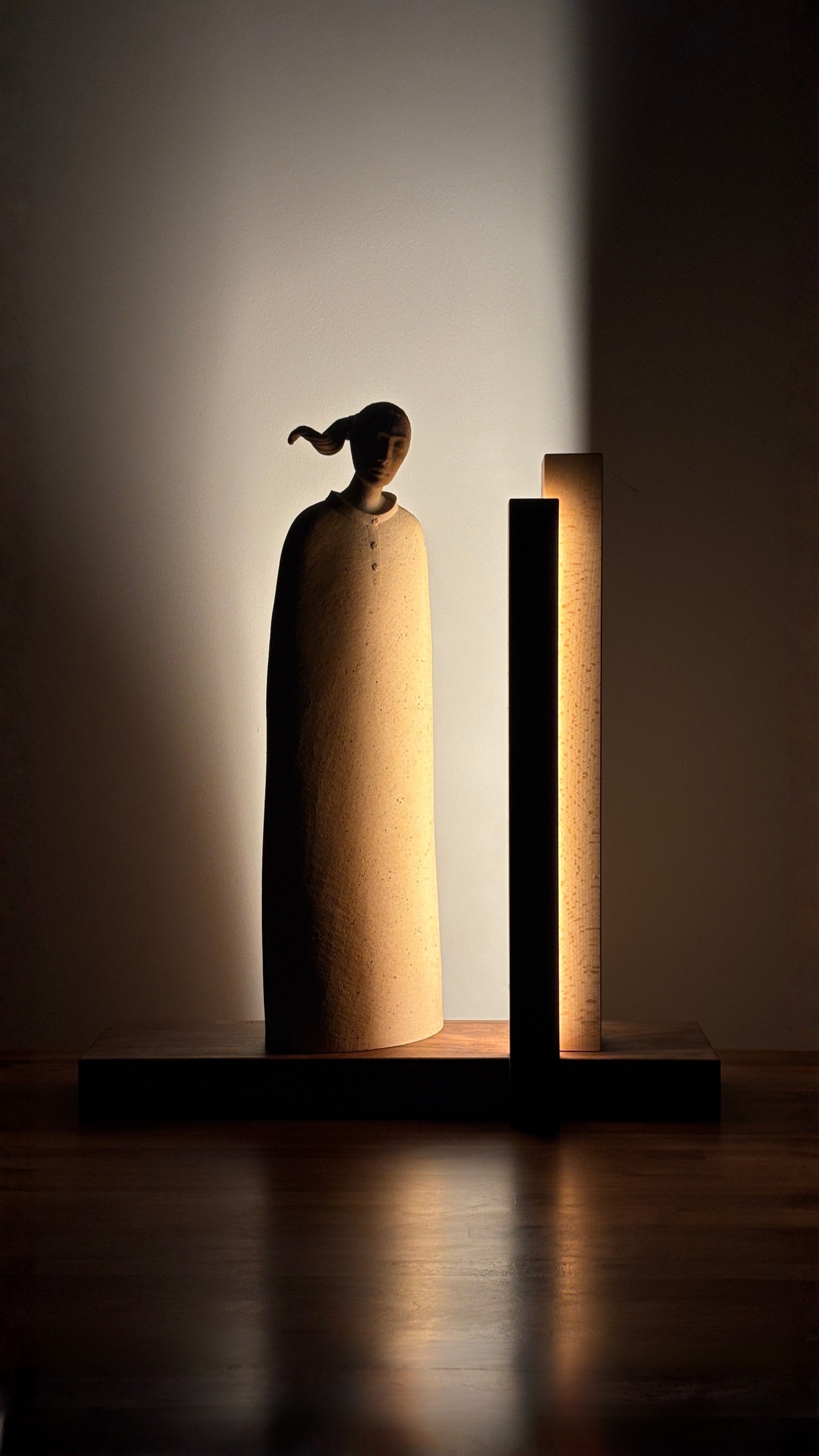

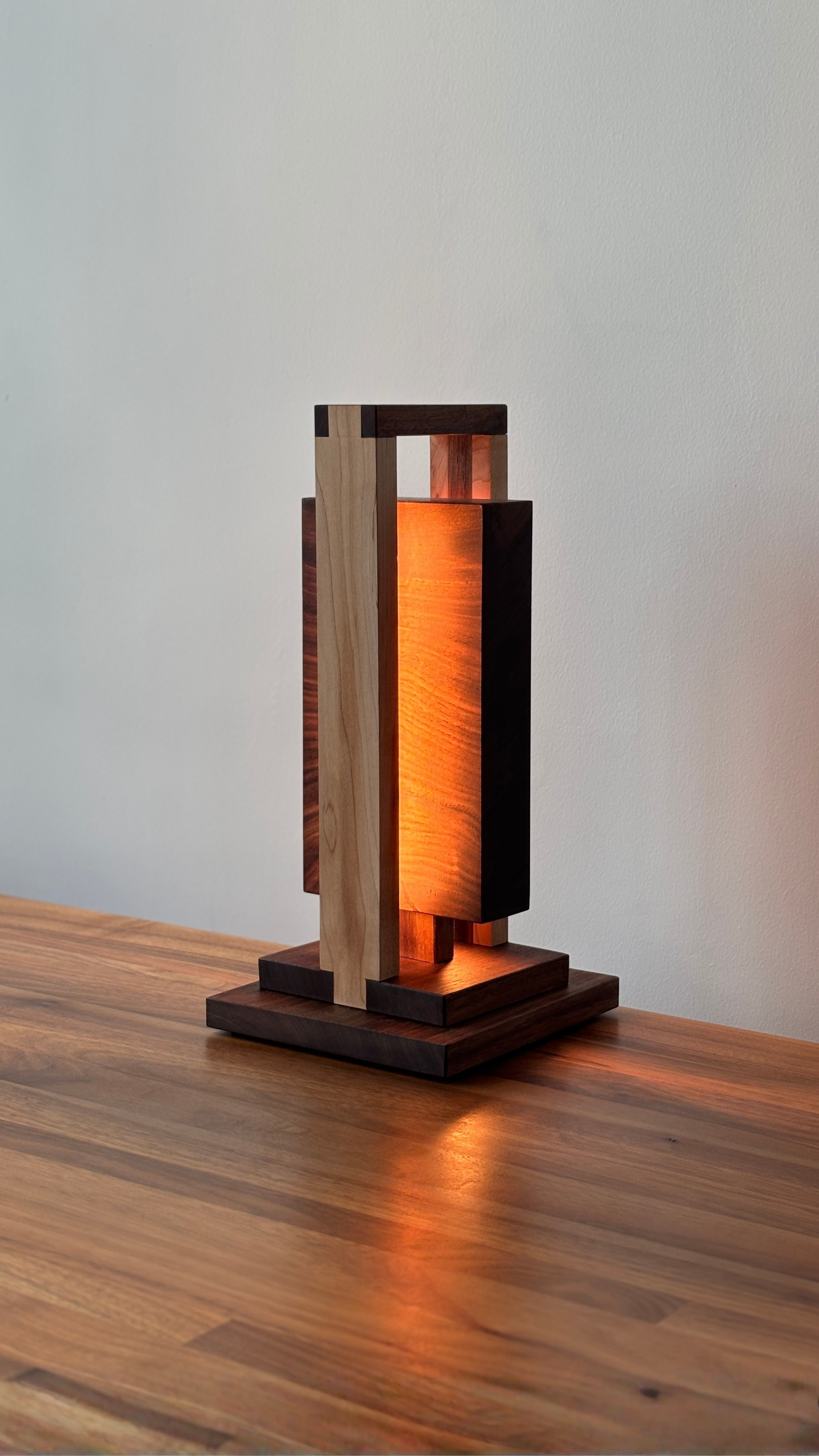
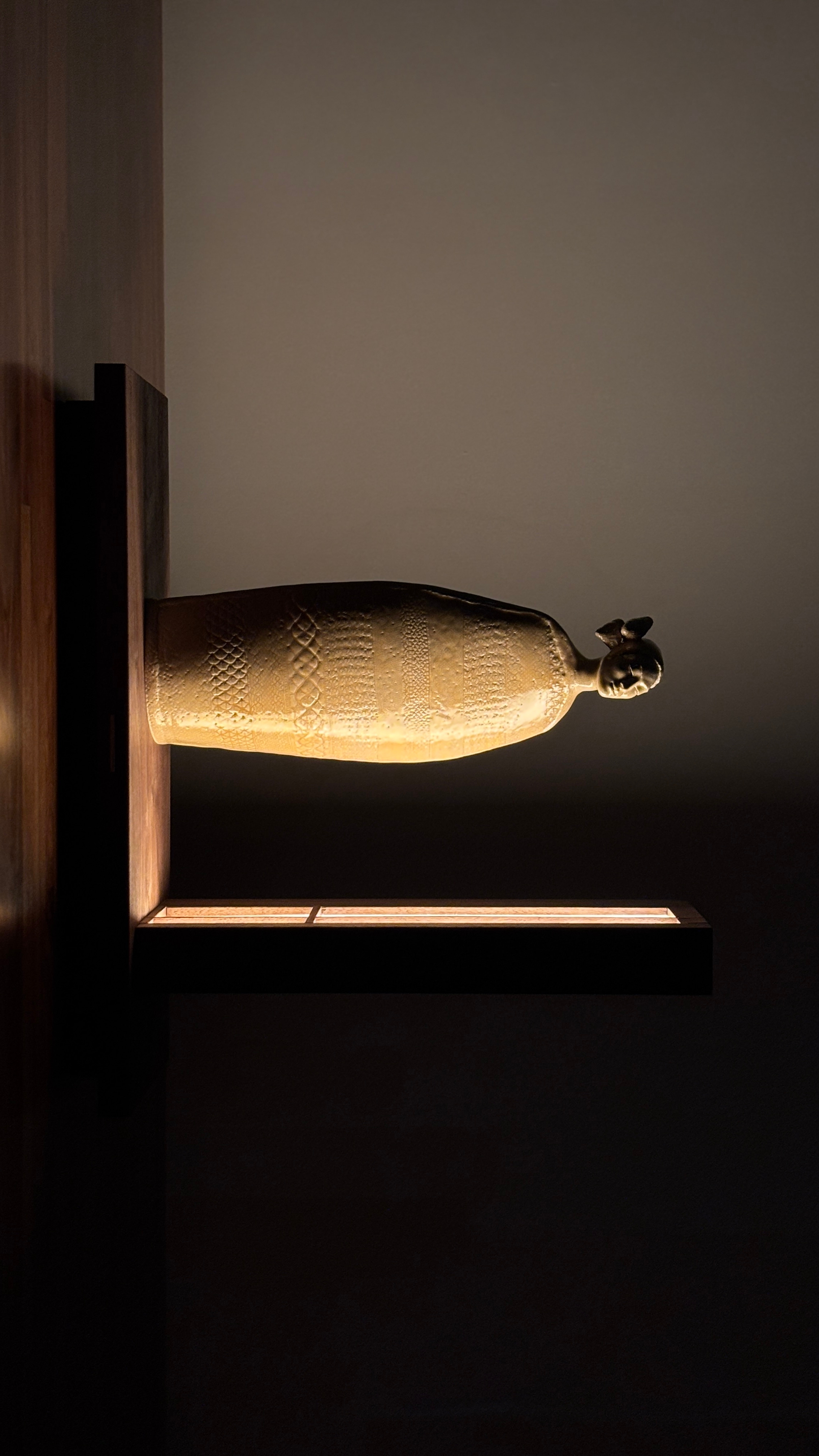
Patric Stenhouse
I'm a South African that grew up in the small and beautiful coastal town of Mossel Bay. It is situated on the Garden Route, which is brimming with forests, hills and ocean - there I developed my love for nature, and trees, and wood.
I then moved to the City of Cape Town where I studied to become a robotics engineer. In this field I developed skills in mechanical and electrical / electronic design. I was also taught the art of using machines to shape wood and metal by Colin Forsyth, who along with his wife Bee Forsyth, looked after me in these very formative years. It was during this time I started to experiment with lights.
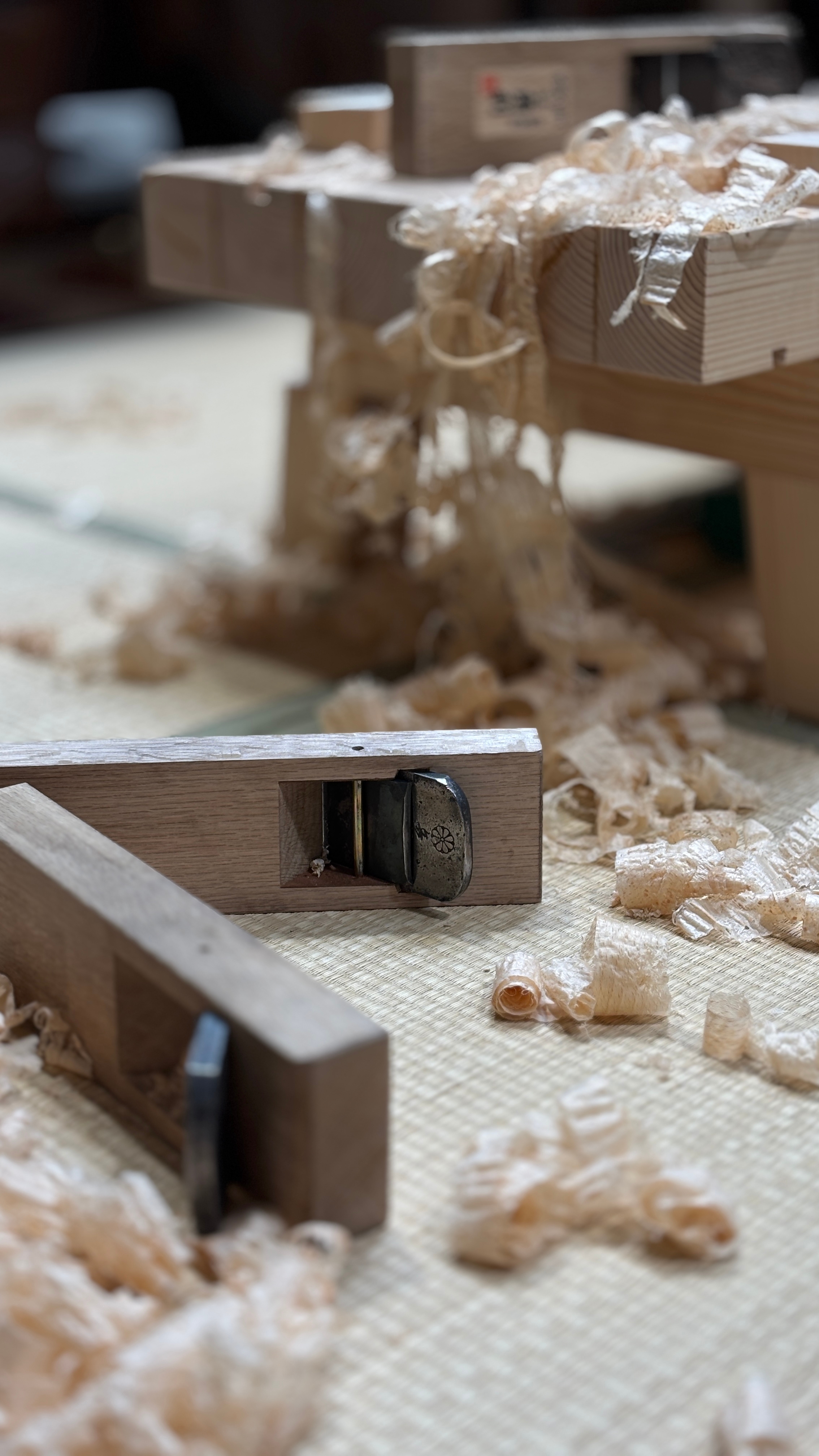
In 2021 I purchased my first set of Japanese hand tools and fell in love with how beautiful and versatile they were. Since I was already accustomed to being on the floor, I decided to learn how to woodwork in the traditional style of some Japanese Carpenters (unfortunately without tatami).
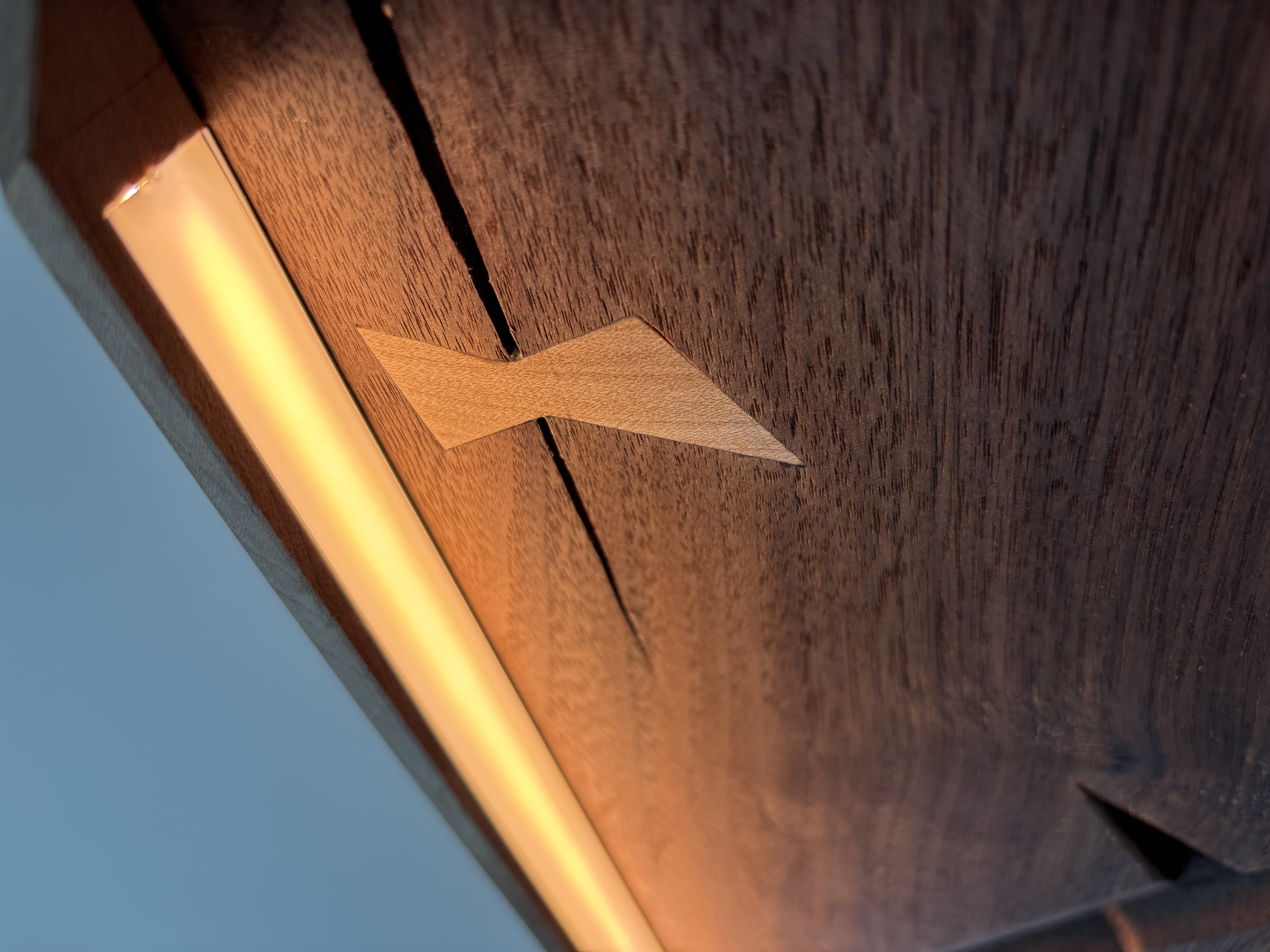
These challenging tools slowly embedded a philosophy of respect and anti expediency within me as I filled my home with furniture. I also delved deeply into the world of lighting, using the knowledge I had gained from my studies.
From then on I made it my purpose to warm homes and hearts with pieces made exclusively with Japanese hand tools, out of respect to the hard working people of my life and out of respect for tools that have been developed by generations of Masters.
Honouring Wood and Steel
Wood is alive. It breathes, moves, and responds. It's fragrant. Wood can have a rich and sometimes historically significant story. Wood can be sourced ethically and sustainably. It's regenerative. It is also, rather interestingly—the embodiment of decades of captured sunlight. Its the perfect medium to convey warmth. This is why my process aims to honour Wood.
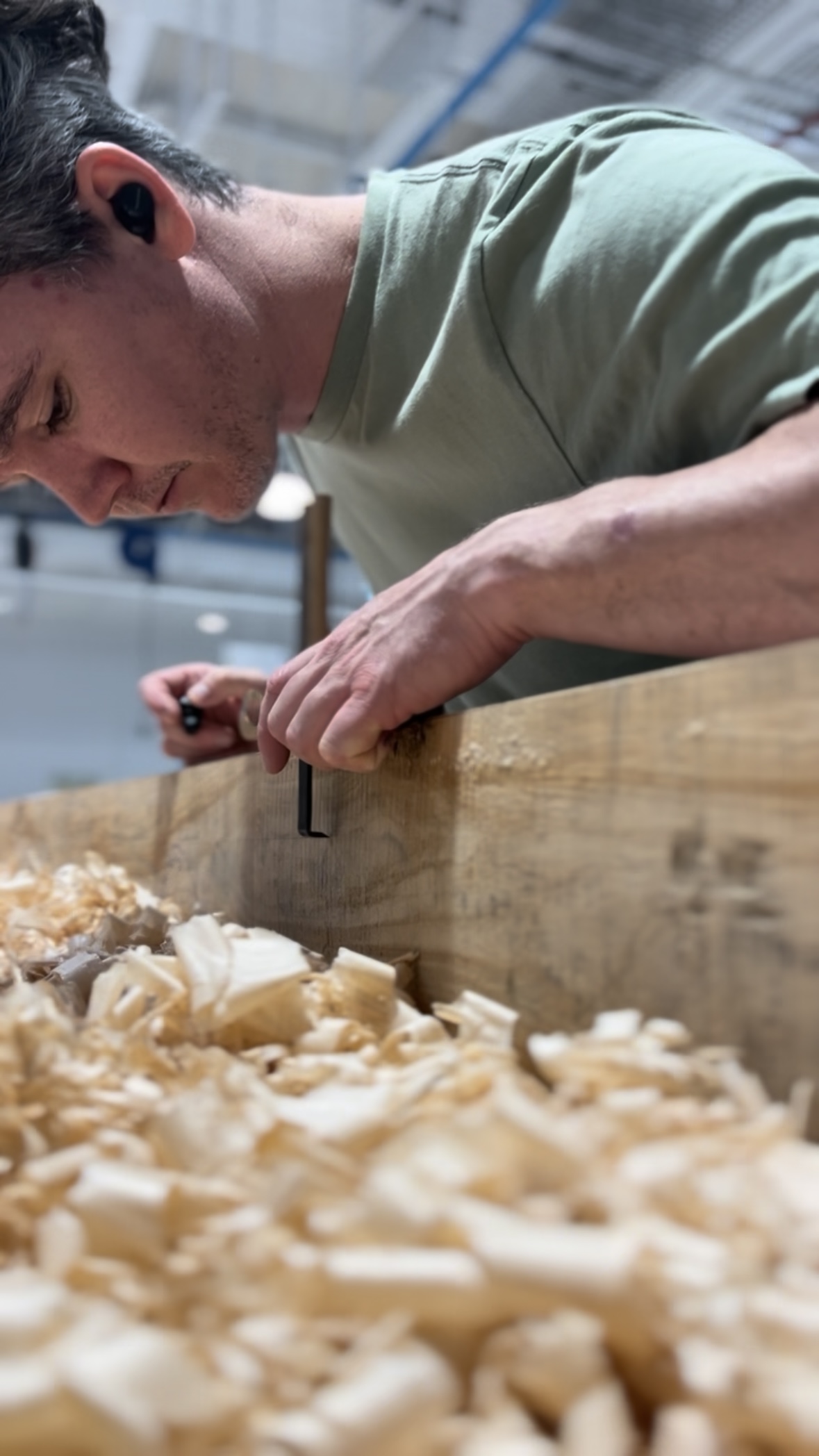
Machinery, while fast and effective, has the disadvantage of being relatively wasteful. The precision of Japanese hand tools allows me to remove only as much material as required, and that Wood which is removed by the tools is also used, leaving as little as possible to waste.
The experience of using hand tools, with their subtle feedback, allows my senses to get deeply in touch with the wood. Every piece is a story which I must study to allow the tools to effectively guide the designs.
Of course, a tool cannot cut without a blade. Mastering the care of a Japanese blade is a lifelong commitment. While exquisitely beautiful, they require infallible patience, respect and consistency. The process of sharpening is a tactile and meditative experience, and for me has developed a spiritual connection to the process of shaping wood.
Ethics of Conduct

Respecting materials...

.Constant improvement.
.Lifelong commitment to craft.
Contact
